

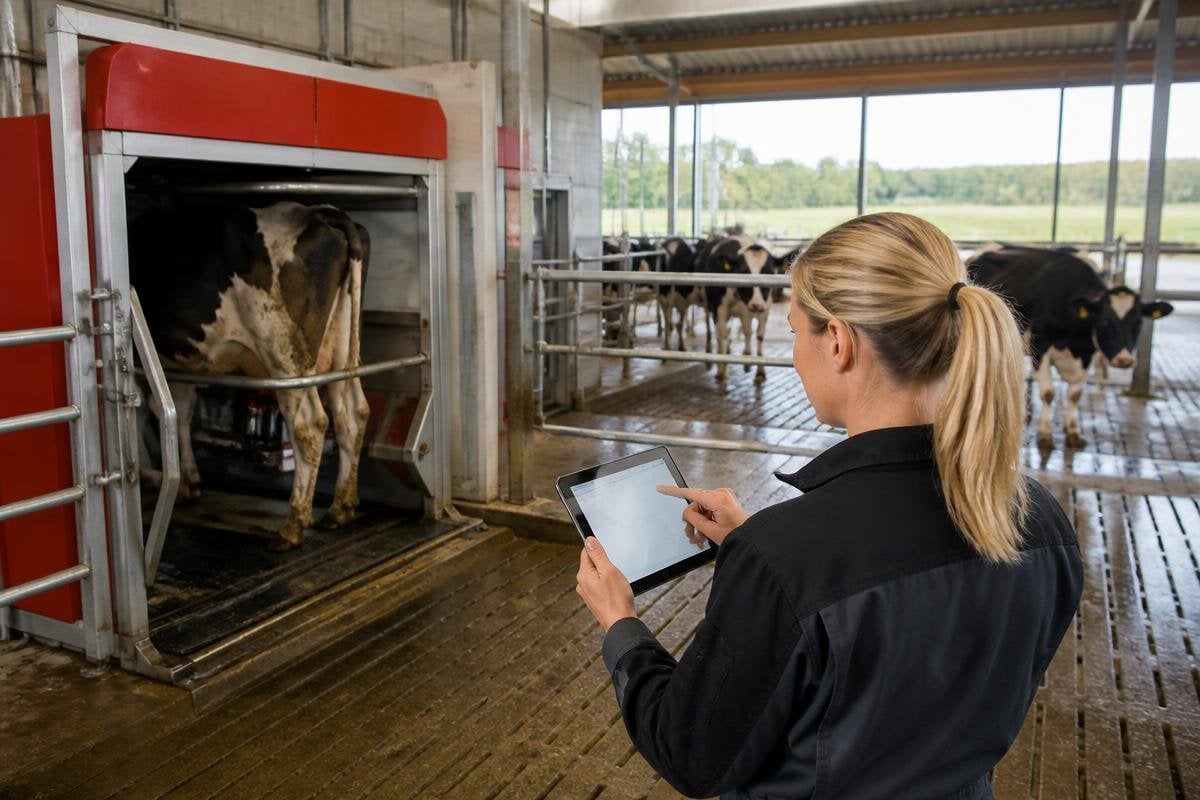
A dairy robot can milk a cow when she enters the stall, checks the milk as it flows, and records the visit without a person attaching cups by hand. The larger change is where farm work happens: less time at the milking line, more time checking animals, software, feed, and faults.
Quick read
- Robotic milking works through sensors, teat detection, and automatic cup attachment
- Cows choose milking visits, while the system records yield and milk quality
- The farm still needs people for animal care, repairs, cleaning, and decisions
How robotic milking works
A milking robot uses a camera or laser sensor to locate each teat. The system then guides a teat cup into place and starts the vacuum cycle after it confirms the connection. If a cup loses contact, the robot can stop that line instead of continuing to pull air.
The software records each cow by her electronic tag. It can log milking time, milk volume, flow rate, and signs linked to udder health, such as changes in milk conductivity. Conductivity measures how easily electricity passes through the milk, and a sudden change can prompt a closer check.
That record changes the daily routine. A farmer can see which cow visited the robot, how long she stayed, and whether her output differs from her usual pattern. The screen does not replace a person walking through the herd. It helps point that person toward the animals that need attention first.
Why farms use more than one robot
Milking is only one part of the work. Some dairy farms also use automatic feed pushers to move feed back within reach of the cows. Others use floor-cleaning machines that push manure toward collection channels, reducing the number of manual cleaning rounds.
These systems work best when the farm layout supports them. A feed pusher needs clear lanes and a route it can repeat. A cleaning machine needs a floor it can cross without getting trapped by gates, deep grooves, or loose objects. Small layout problems can turn an automatic task into a daily service call.
The same principle applies to sensors. A tag reader must identify the right cow. A camera needs a clear view. A software alert must point to a useful action, not send a stream of warnings that nobody has time to check.
On a dairy farm, a false alert can send someone to a stall for no reason, while a missed alert can leave a sick cow waiting. Use Robot 24 to compare farm robots with systems used in warehouses and factories. The next section looks at what those machines change in the farmer’s daily work.
What changes for the farmer
Robotic milking can spread milking visits across the day instead of placing them into two fixed sessions. That may give the farmer more control over when they handle inspections, treatment, feed checks, and maintenance.
The work becomes more technical too. Someone must clean the milking area, check hoses and filters, respond to alarms, and confirm that the robot is reading cow tags correctly. A farm may need a service plan for the robot and a backup process for periods when the system stops.
Animal care remains the deciding factor. A cow that avoids the robot, visits too often, or shows a sudden change in milk flow needs a person to investigate. Automation can record the pattern, but it cannot make the full health decision from one alert.
Where the limits sit
A robotic milking system needs enough cows using the stall to justify its cost and floor space.
The fit also depends on herd behavior, building design, labor costs, electricity, cleaning needs, and access to service support. Without figures for a specific farm, no honest buyer can say that a robot will lower costs.
The system can also create a new failure point. A blocked sensor, dirty camera, worn cup, network fault, or software error can slow milking for the whole group. A manual setup has labor demands; a robotic setup has equipment and service demands.
I’d choose robotic milking only when the farm can support daily checks and a clear backup plan.
A practical buying check
Before comparing models, check these points on the farm:
- Cow flow: Can cows reach the robot without sharp turns, blocked lanes, or long waits?
- Milk handling: Does the tank, cooling system, and wash cycle match the robot’s output?
- Animal records: Can the system connect each visit and alert to the right cow?
- Service cover: Who responds when the robot stops, and how fast can parts arrive?
- Manual backup: Can staff keep milking if the system is offline for a full shift?
- Staff time: Who checks alerts, cleans the stall, and reviews changes in milk flow?
A farm that answers those questions before buying has a clearer test than a sales demonstration. The next decision is measured in daily visits, service response time, and the number of cows one robot can handle without creating more work than it removes.
